


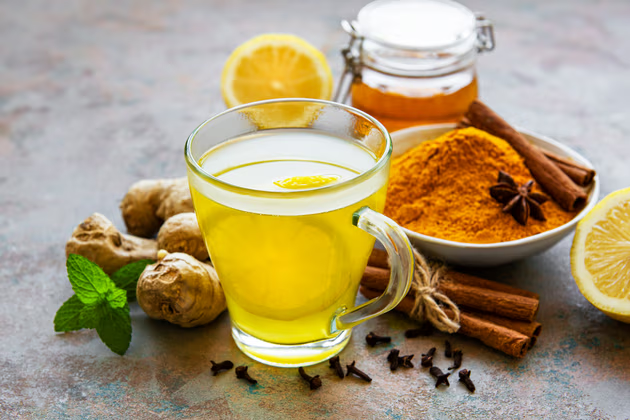
Turmeric (Curcuma longa), a perennial herb of the Zingiberaceae family, indigenous to Southeast Asia and the Indian subcontinent, has demonstrated therapeutic potential across diverse metabolic and cardiovascular conditions. Its bioactive constituents comprise curcuminoids (3-5%), responsible for the characteristic orange-yellow pigmentation, and essential oils (3-7%), predominantly terpenoids, which contribute to its aromatic properties. Curcumin, the predominant curcuminoid constituting approximately 77% of this fraction, exhibits remarkable pleiotropic bioactivity.
Bioactive Constituents
The curcuminoid family encompasses over 50 structurally related compounds, with curcumin (diferuloylmethane), demethoxycurcumin (17%), and bisdemethoxycurcumin (3-6%) representing the principal constituents. These phenolic compounds confer turmeric’s characteristic pigmentation and constitute its primary bioactive fraction.
Steam distillation yields 3-7% essential oils rich in sesquiterpenoids (e.g., α-phellandrene, zingiberene) and monoterpenoids (e.g., sabinene, cineol). Terpecurcuminoids, a rare class of compounds featuring curcuminoid-terpenoid conjugation, represent an emerging area of phytochemical investigation.
Gastrointestinal absorption of curcumin remains intrinsically limited, though co-administration with bioavailability enhancers such as piperine (20 mg) inhibits hepatic and intestinal glucuronidation, significantly increasing systemic absorption within 30-60 minutes.


Antidiabetic Mechanisms
Pancreatic β-Cell Function
Curcumin ameliorates high glucose-induced insulin resistance in pancreatic β-cells while concurrently enhancing insulin expression and secretion. Additionally, curcumin attenuates hyperglycemia-induced oxidative stress and induces dose-dependent apoptosis in pancreatic tissues.
In adipocytes and hepatocytes, curcumin inhibits glucose uptake by suppressing GLUT4 translocation from intracellular compartments to plasma membranes. Both turmeric extract and its constituent ar-turmerone demonstrate in vitro antidiabetic activity by inhibiting α-amylase and α-glucosidase, with potencies exceeding those of standard antidiabetic agents.
Incretin Effects
Murine studies indicate that curcumin enhances glucose tolerance by stimulating glucagon-like peptide-1 (GLP-1) secretion, promoting β-cell proliferation, and enhancing glucose-responsive insulin secretion.

Cardioprotective Mechanisms
Lipid Modulation
Curcumin exerts hypolipidemic effects through multiple mechanisms:
- Upregulation of LDL receptor expression in hepatocytes (HepG2) and macrophages, enhancing LDL clearance
- Transcriptional repression of HMG-CoA reductase, the rate-limiting enzyme in cholesterol biosynthesis
- Reduction of intestinal cholesterol absorption while enhancing hepatic bile acid conversion
Clinical evidence supports these findings: a six-month randomized controlled trial administering 750 mg curcuminoids daily to T2DM patients demonstrated a significant reduction in atherogenic markers
Anti-inflammatory and Antioxidant Effects
Curcumin attenuates nuclear factor-κB (NF-κB) activation, suppressing pro-inflammatory cytokines including interleukin-6 (IL-6), tumor necrosis factor-α (TNF-α), and interleukin-1 (IL-1). This anti-inflammatory action correlates with reduced C-reactive protein (CRP) levels at doses ranging from 1,200 mg to 2 g.
Vascular Protection
Curcumin inhibits monocyte adhesion and trans endothelial migration, processes critical to atherosclerotic plaque formation. In oxidized LDL-stimulated endothelium, curcumin reduces reactive oxygen species production and downregulates adhesion molecule expression. Studies in ApoE⁻/⁻ mice demonstrate that curcumin (15-25 mg/kg/day) significantly reduces atherosclerotic plaque area and hepatic lipid deposition.


Adipose Tissue Modulation
Curcumin exerts anti-obesity effects through multiple mechanisms: enhanced fatty acid oxidation, suppressed de novo lipogenesis, inhibition of preadipocyte differentiation, and induction of adipocyte apoptosis.
Safety Profile
Extensive human trials confirm curcumin’s safety across a wide therapeutic window. Doses up to 8 g/day demonstrate no adverse effects, and 12 g/day over three months shows no apparent toxicity. Mild, self-limiting adverse effects, including constipation, nausea, and dyspepsia, occur infrequently and resolve spontaneously.
Dose-Dependent Effects
Paradoxical pro-oxidant effects emerge at supra-nutritional concentrations: in isoproterenol-induced myocardial necrosis models, curcumin demonstrates antioxidant activity at 100-200 mg/kg/day but promotes lipid peroxidation at 400 mg/kg/day.
Preclinical evidence raises concerns regarding high-dose curcumin exposure during embryogenesis. These findings suggest a potential teratogenic risk during the first trimester of pregnancy.
Drug Interactions
While generally well-tolerated, curcumin may interact with anticoagulant medications due to mild antiplatelet effects. Concurrent use with CYP450-metabolized drugs warrants consideration, though clinically significant interactions appear rare at dietary intake levels.
Future Perspectives
The extant literature substantiates turmeric and its principal bioactive constituent, curcumin, as promising nutraceutical interventions for cardiometabolic disorders. Documented benefits include:
- Improved glycemic control through enhanced insulin sensitivity and secretion
- Favorable lipid modulation, particularly LDL-c and triglyceride reduction
- Attenuation of inflammatory markers and oxidative stress
- Direct myocardial protection against ischemic, hypertrophic, and apoptotic injury
- Amelioration of obesity-associated adipose tissue dysfunction
Despite these compelling mechanisms, several limitations constrain current clinical applications. Curcumin’s poor systemic bioavailability necessitates formulation optimization, and considerable heterogeneity in study design, dosage, and duration precludes definitive therapeutic recommendations. The inconsistent effects on HDL-cholesterol and total cholesterol require further investigation, particularly in high-risk populations where benefits may be most pronounced.
References
Cox FF, Misiou A, Vierkant A, Ale-Agha N, Grandoch M, Haendeler J, Altschmied J. Protective Effects of Curcumin in Cardiovascular Diseases-Impact on Oxidative Stress and Mitochondria. Cells. 2022; 20;11(3):342.
Hou K, Chen Y, Zhu D, Chen G, Chen F, Xu N, Barakat K, Zheng J, Xie X, Chen R. Curcumin inhibits high glucose oxidative stress and apoptosis in pancreatic beta cells via CHOP/PCG-1a and pERK1/2. Front Biosci (Landmark Ed) 2020;25:1974–1984.
Mirzabeigi P, Mohammadpour AH, Salarifar M, et al. The effect of curcumin on some of the traditional and non-traditional cardiovascular risk factors: A pilot randomized, double-blind, placebo-controlled trial. Iran J Pharm Res. 2015;14:479-486.
Mohammadabadi T, Ben Ayad A E, Maheshwari A. 2025. Ginger: A Nutraceutical Supplement for Protection Against Various Cardiovascular Diseases in Clinical Trials. Cureus 17(3): e80841. doi:10.7759/cureus.80841.
Yadollahi, A., dastani, M., Zargaran, B., Ghasemi, A. H., Rahimi, H. R. The Beneficial Effects of Curcumin on Cardiovascular Diseases and Their Risk Factors. Reviews in Clinical Medicine, 2019; 6(1): 12-19.
Zhang HA, Kitts DD. Turmeric and its bioactive constituents trigger cell signalling mechanisms that protect against diabetes and cardiovascular diseases. Mol Cell Biochem. 2021;476(10):3785-3814.


